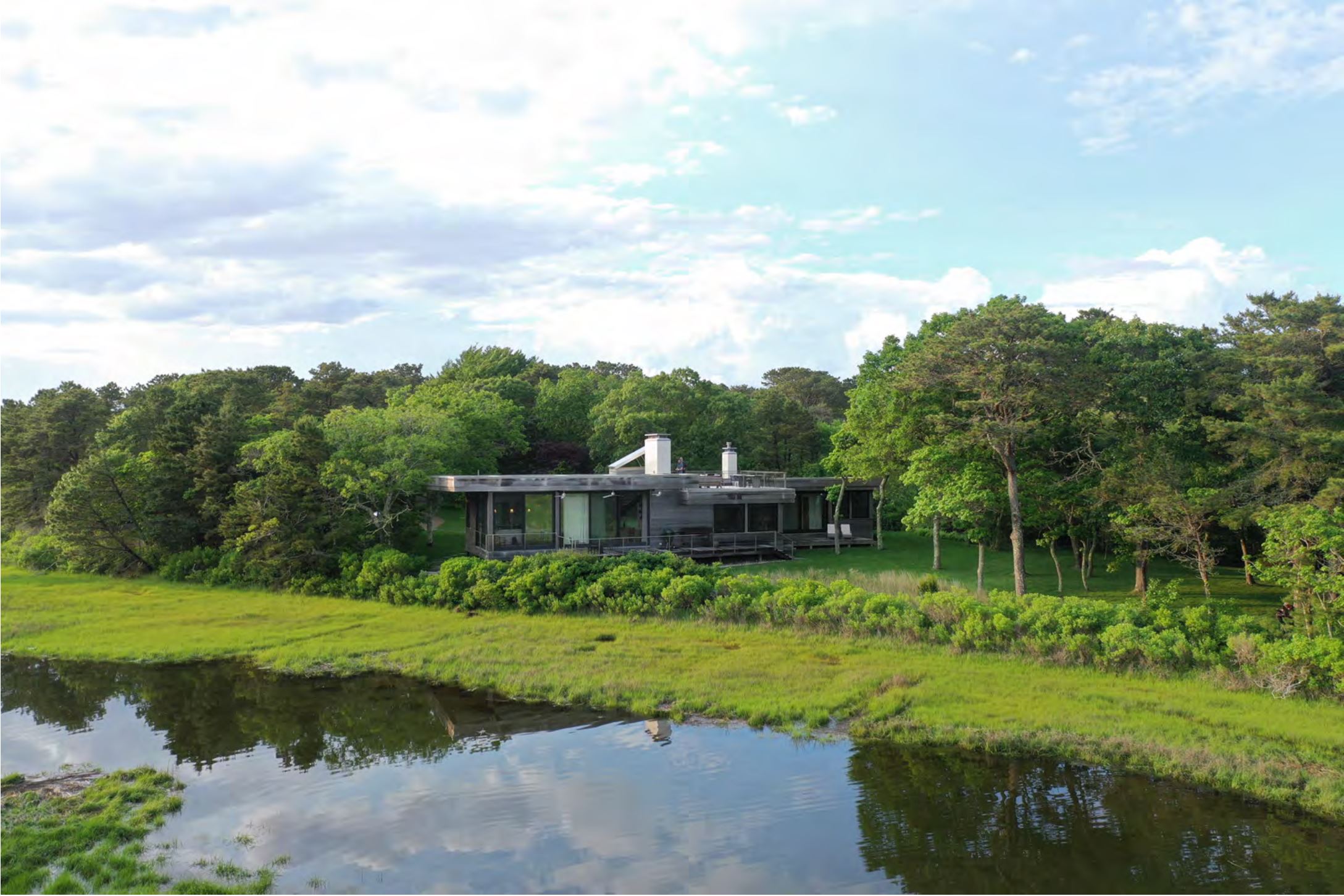
Built to be cared for.
We build durably, with materials that age well and can be repaired. Whether we are restoring a 19th-century farmhouse or designing a new home from the ground up, we reach for the same toolkit: assemblies that can dry, and a plan that leaves room to adapt. The aim is a house that can be looked after, and that can change with the people who live in it.
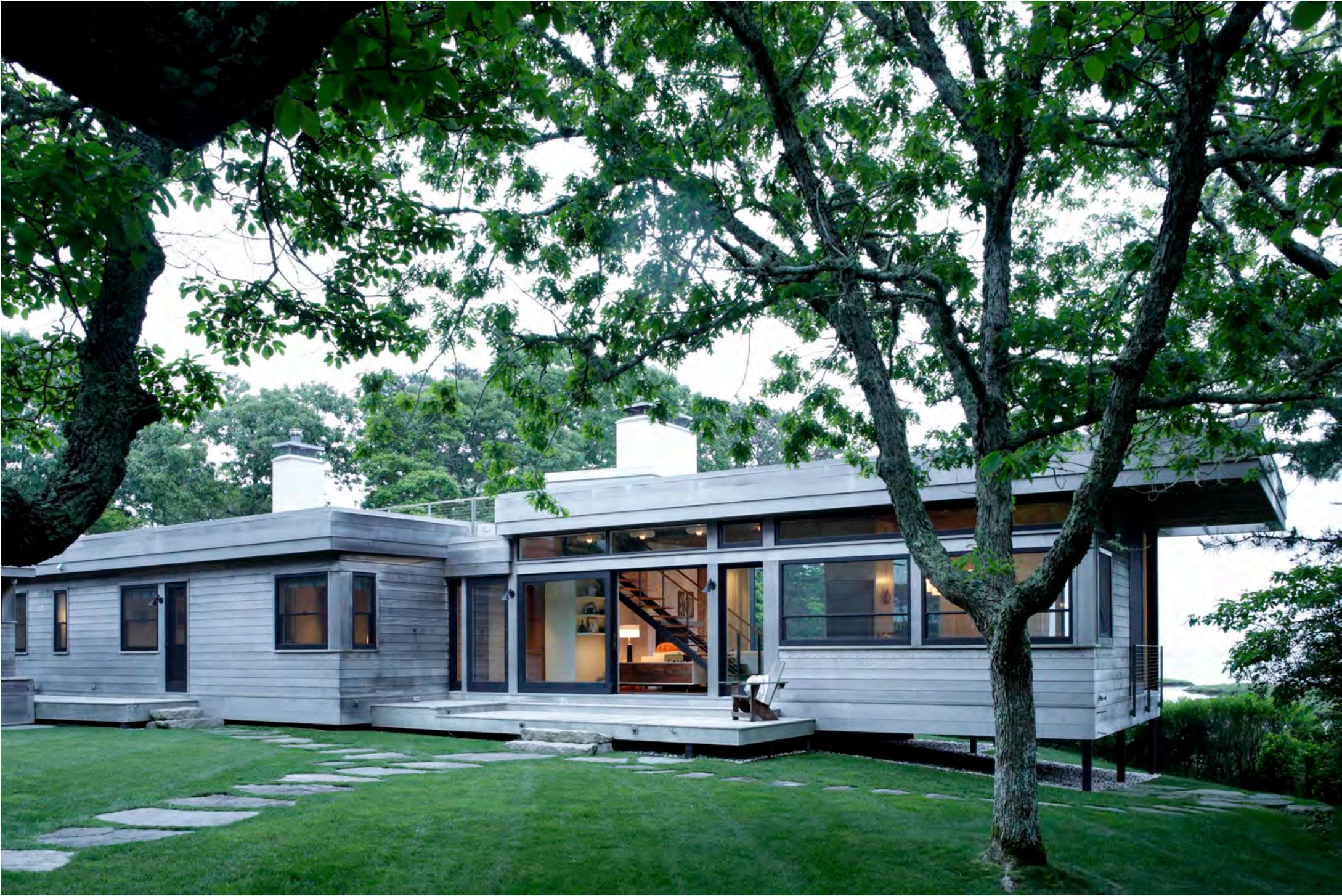
Trapped moisture does the damage.
Mold, mildew, and rot follow wherever moisture has no path to escape. In a sealed wall, that damage can stay hidden for a long time.
A common approach is to seal the envelope tightly and control the interior with machines. That can work, but it depends on every joint being sound. A gap in a vapor barrier, a missed joint in a spray-foam application, or a poorly detailed window flashing can let moisture into an assembly with nowhere to go. Behind plastic cladding, acrylic paints, and closed-cell foam, rot can proceed out of sight.
The traditional answer is different: not sealing, but breathing. Biogenic materials — those derived from living organisms — are permeable to water vapor. They allow moisture to enter, and to leave. Walls that dry out easily last longer and help avoid moldy air.
This is an old way of building. Many houses in Scandinavia, England, and central Europe were made so moisture could leave, and their fabric can still be repaired. We use the same idea: an assembly that can dry if a joint is imperfect.
Light-filled, clean-aired, and built from natural materials.
A healthy house starts with two plain things: daylight and fresh air. We plan both from the first site visit. We turn the house toward the sun, set windows where the light is best in each season, and pull the landscape into the rooms. Then we build with materials that breathe, and pair them with modern systems that are straightforward to service. That balance of old and new, of landscape and house, is what we mean by harmony in design.
Daylight first.
We study the site before we draw a plan: which way it faces, where the trees are, how the sun moves across it in June and in December. Living spaces go where the light is best. Larger windows face south, smaller ones face north, east, and west, and roof overhangs and trellises shade the summer sun while letting the low winter sun in. Clerestory windows bring light deep into a room and give you a view up into the trees. The result is a light-filled house that needs fewer lights on during the day and feels good to be in.
Natural materials that let a house dry.
We build with biogenic materials, meaning materials that grow: timber, wool, straw, hemp, and lime. Inside, lime plaster and linseed paint in place of gypsum board and acrylic paint. In the walls, wood-fiber, wool, or hempcrete in place of foam. These materials are free of the petrochemicals and glues that give off fumes, and they handle moisture well. Lime plaster takes up extra humidity and gives it back as the air dries.
How we build walls and roofs.
Our building-science approach comes down to three rules:
Stop bulk water. Rain and groundwater are kept out with good roofs, careful flashing, drained rainscreen siding, and sites that slope water away from the house.
Stop bulk airflow. Air leaking through gaps carries heat and moisture into walls, so we build a continuous air barrier and test it.
Let vapor move. Water vapor passes slowly through every material. We choose materials that let it pass, so any moisture that gets into a wall can dry out, to the inside or the outside, instead of getting trapped behind plastic or foam.
A house with a tight, breathable shell stays comfortable and quiet.
Modern systems, quietly placed.
Traditional materials work well alongside good modern equipment. Once a house is tight, it needs a steady supply of fresh air. Energy recovery ventilation (ERV) is our standard for well-ventilated buildings, paired with makeup air for combustion appliances and pressure balancing. An ERV brings in filtered outdoor air day and night and sends stale air out. On the way, it uses energy recovery to pass warmth (and some moisture) from the outgoing air to the incoming air, so fresh air doesn't mean a cold draft or a high heating bill.
We pair that with modern electrical and plumbing. We design for passive solar gain and passive cooling. We plan chases, closets, and equipment rooms early, so the systems are easy to service and stay out of the way of the rooms.
Why it matters.
Cleaner indoor air. Fresh, filtered air all day, and fewer materials that give off fumes.
Fewer moisture problems. Walls that can dry are far less likely to grow mold or rot.
Comfort. Even temperatures, no drafts, steady humidity, and a quiet house.
Daylight. Rooms that are bright and pleasant from morning to evening.
Durability. Materials that can age and be repaired, looked after by systems that are simple to maintain.
Planning a healthy, light-filled home in Lincoln or Concord, on Martha's Vineyard or Cape Cod, in Boston and greater Boston, or in Maine, Vermont, Montana, or California? Start with a conversation. Email zander@auerbacharchitecture.com or call 917 991 8533. Questions we hear about this are in the FAQ.
- Vapor barriers and plastic sheet liners — They seal moisture in rather than out. A single imperfection and they become a mold incubator.
- Extruded plastic cladding (Azek, PVC trim) — Impermeable, petroleum-derived, and prone to concealing moisture damage behind a pristine surface.
- Spray foam insulation in concealed assemblies — Closed-cell foam seals tightly. When moisture finds its way in, there is no easy way out.
- Extruded polystyrene (XPS) and foil-faced rigid foam — Effective insulators that create impermeable barriers incompatible with a breathable assembly.
- Glue-impregnated engineered boards (OSB, LVL, glulam) in moisture-prone locations — The adhesives are the weak point: once saturated, delamination is irreversible.
- Acrylic and vinyl-binder paints — They form an impermeable film that traps moisture in the substrate below, accelerating the very decay they appear to prevent.
- Linseed oil paint — Pressed from flaxseed and pigmented with natural minerals. It penetrates rather than films, so the wood can still be maintained, and a later coat can go on without stripping the last one. We work with producers such as Brouns & Co committed to traditional, solvent-free formulation.
- Straw and wool insulation — Both biogenic, both permeable to vapor. Straw in dense packs insulates well. Wool batts take up moisture and give it back rather than simply blocking it. In a breathable assembly, neither is a ready food for mold.
- Limecrete and recycled glass slabs — In lieu of conventional concrete, limecrete — a lime binder with natural aggregate — remains vapor-permeable and continues to carbonate and harden over time. Paired with recycled glass aggregate, it delivers the thermal mass of concrete without sealing the base of a wall assembly.
- Lime plaster and hempcrete — Gypsum wallboard is inert when dry and destructive when wet. Lime plaster is hygroscopic: it absorbs excess humidity and releases it as conditions change, actively regulating the interior. Hempcrete — hemp hurds bound with lime — performs similarly as wall infill: lightweight, well-insulating, and permeable to vapor. Both continue to harden through carbonation for decades.
- Locally sourced and reclaimed timber — Where engineered products would otherwise be specified, we look first to local sawmills and salvage sources. Solid timber, properly detailed, can be repaired, and its grain and resins are still in the wood.
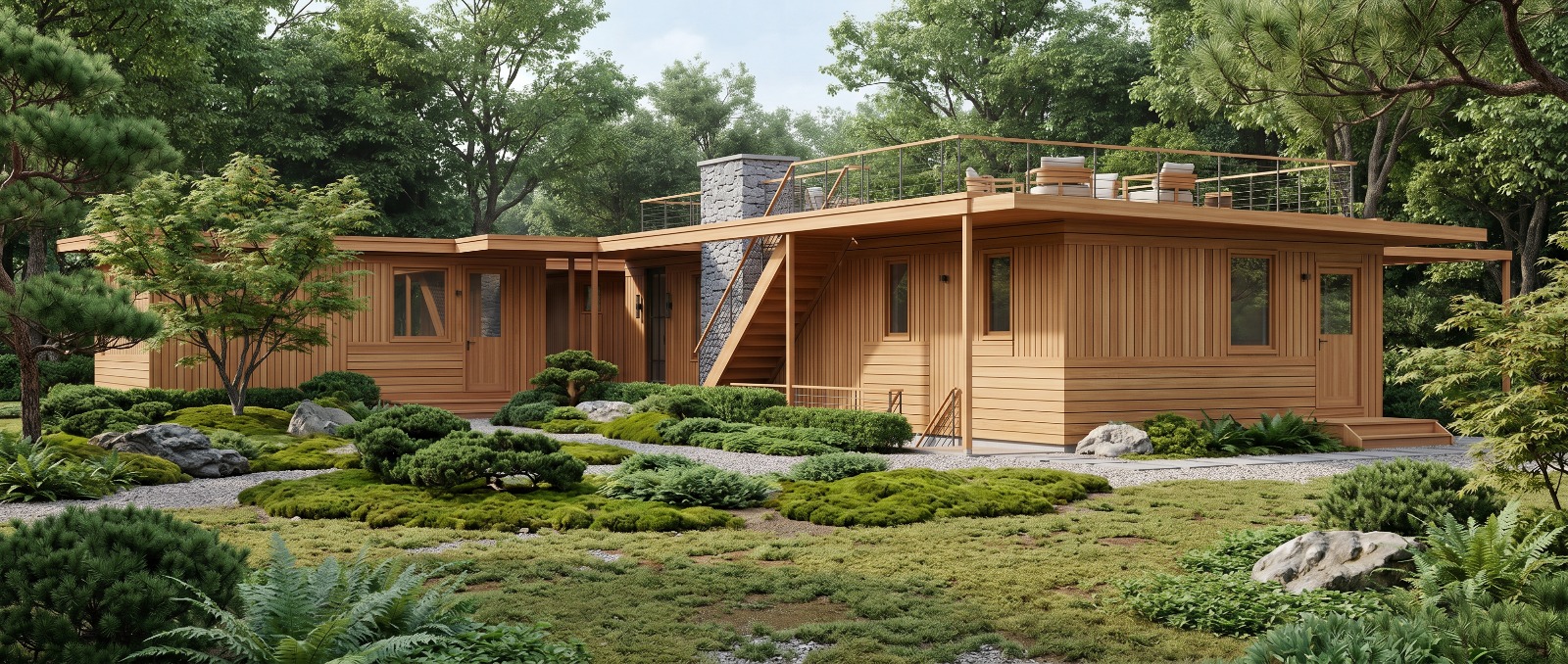
A house that can be looked after.
We try to choose materials that can be maintained, assemblies that can dry if they get wet, and buildings that can be cared for and adapted as the years go on.
We bring this to each project — from a threshold detail on a historic farmhouse to the envelope of a new house. If a material cannot be repaired, we look for one that can.
These principles apply across everything we build. Learn more: Sustainable Architecture · Historic Preservation · Residential Architecture · Renovation & Addition.
Fees, timelines and how a project runs are covered in the FAQ.